© E.Mahoney
© E.Mahoney
© E.Mahoney
© Montenvers - Mer de Glace
© UTMB
© Maisons & Hotels Sibuet
© Jool CHX
© E.Mahoney
© E.Mahoney
© Maisons & Hotels Sibuet
© E.Mahoney
© SeeChamonix.com
© E.Mahoney
© E.Mahoney
© E.Mahoney
© Jool CHX
© E.Mahoney
© E.Mahoney
© E.Mahoney
© E.Mahoney
© E.Mahoney
© E.Mahoney
© E.Mahoney
© E.Mahoney

Mer de Glace & Montenvers Cog Railway, Chamonix
Everything you need to know about a visit to this iconic glacier and railway
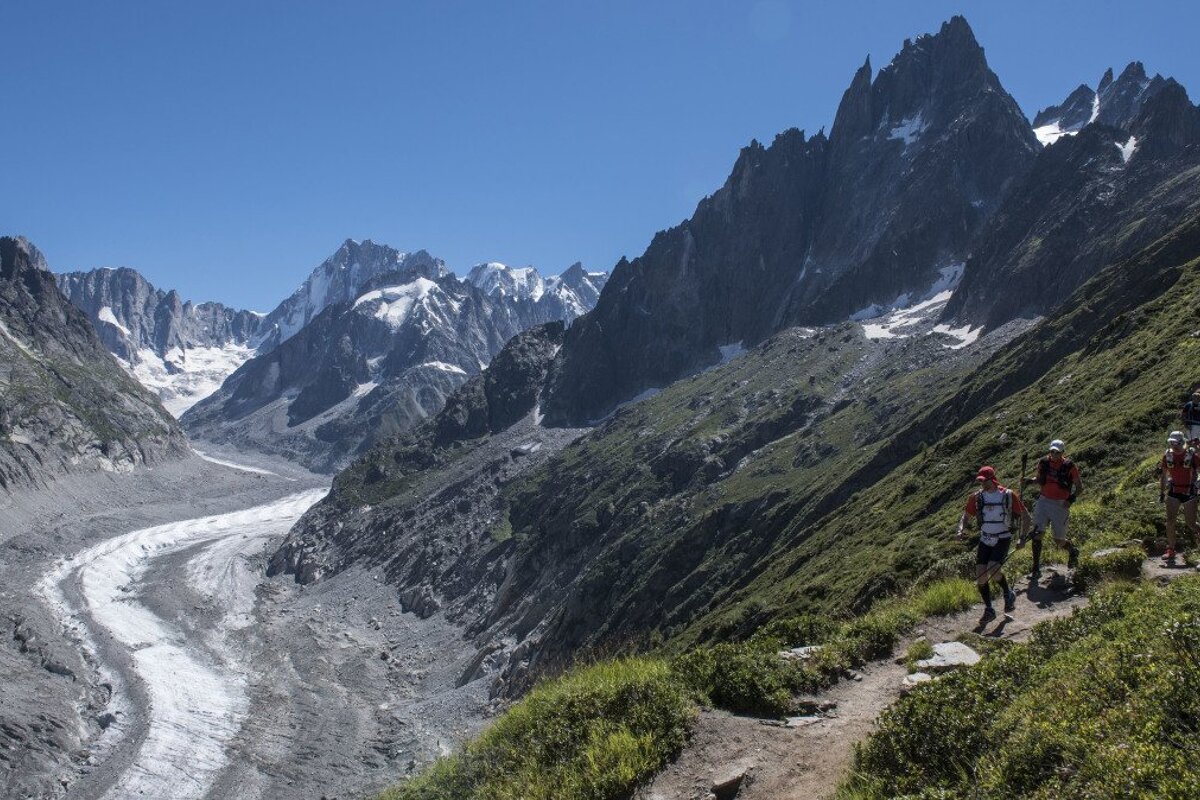
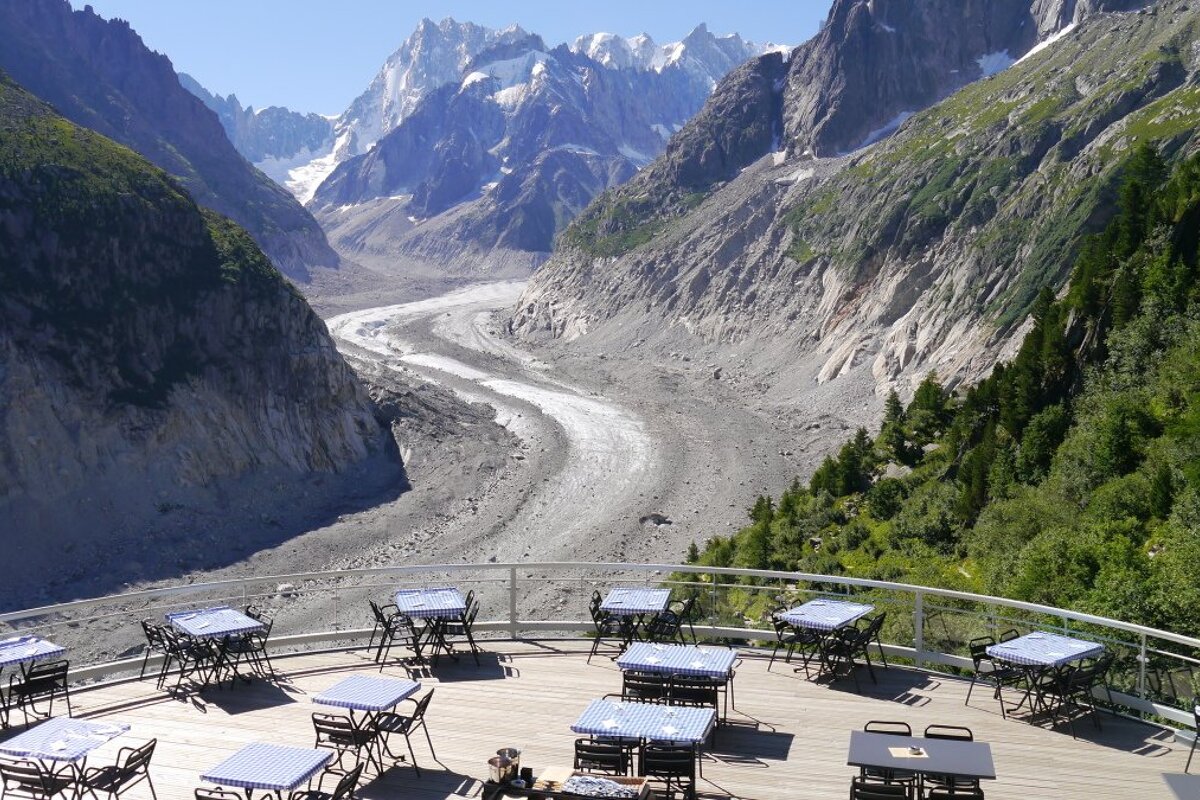
No trip to Chamonix should be complete without a visit to the legendary "Mer de Glace", the longest and arguably the most impressive glacier in the Chamonix valley. It is also the largest glacier in France.
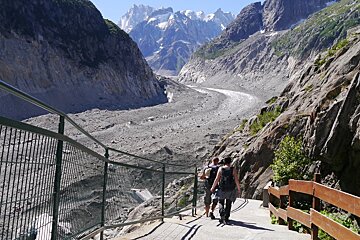
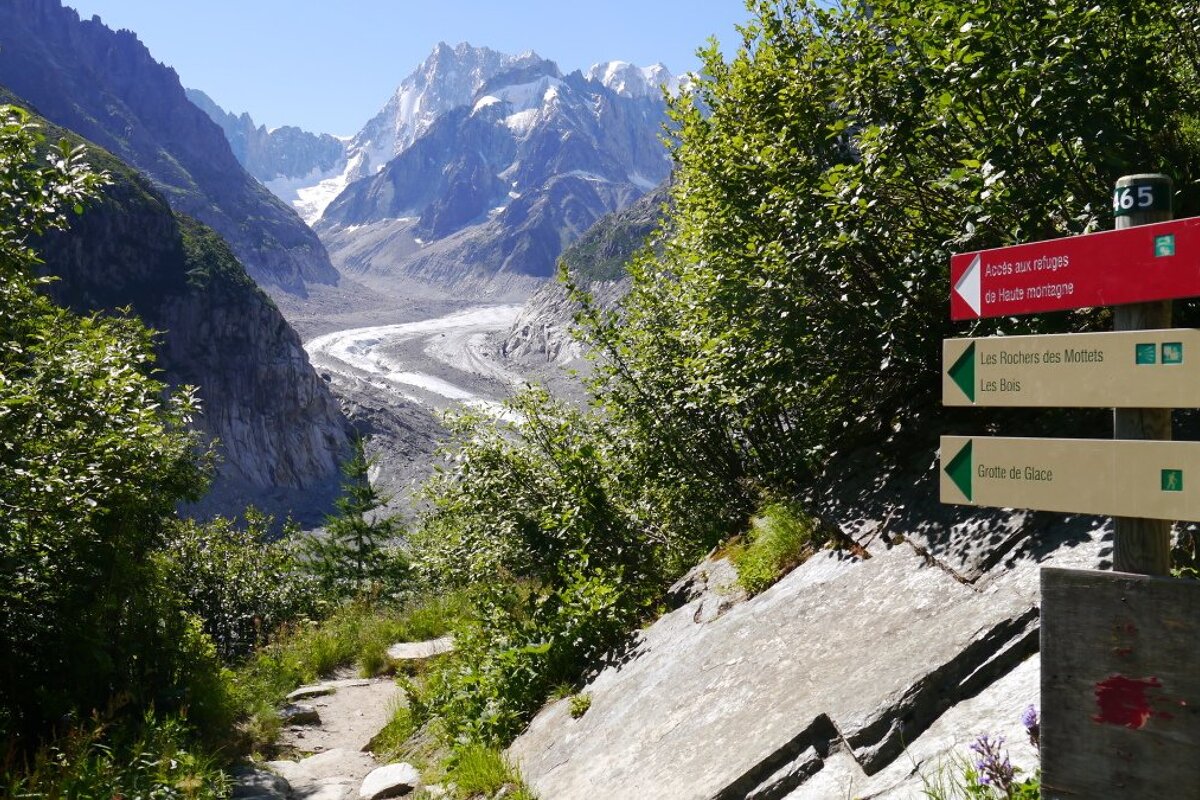
The Mer de Glace (which translates to "Sea of Ice" in English) is 7 kilometres long and has a surface area in the region of 42km². It extends from an altitude of 3,900m at the point where the Leschaux, Le Tacul and the Talèfre glaciers converge, down to 1,400m, just below the Terminal Neige Refuge. The width of the glacier varies between 700 metres and 1,950 metres and the depth of the ice averages around 200 metres, dropping down to around 80 metres near the ice cave.
It's an impressive place to visit in either summer or winter, and should definitely be on your 'to do' list on a visit to Chamonix.
Who should go
| Access | Yes/No | Notes |
|---|---|---|
| Elderly Access | ✓ | There are 440 steps down to the ice cave |
| Babies | ✓ | From 12 months, be advised you will be climbing 900m from the valley floor to an altitude of 1,913m |
| Wheelchair Access | ✓ | Contact ahead of visit for groups of more than four chairs. No access to ice cave |
| Disabled Toilets | ||
| Dogs | ✓ | Must be kept on lead |
| Parapentes | ||
| Mountain Bikes | ||
| Car Parking | ✓ | At other side of road at Planards |
| Lockers | ||
| Reservations Required | Groups need to reserve | |
| Sports & Activities | ✓ | Theme trail, museum, Ice Grotto, walk to Plan de l'Aiguille (Aiguille du Midi mid-station) |

History of the Montenvers / Mer de Glace
Ever since two English explorers, William Windham and Richard Pocock, first discovered the Mer de Glace (“Sea of Ice”) in 1741, it has become one of the world’s most visited natural sites and is a huge draw of visitors to the Chamonix Valley. The area became accessible by mule from 1802, but it was the opening of the Montenvers Train in 1908 that really opened the site up to the masses.
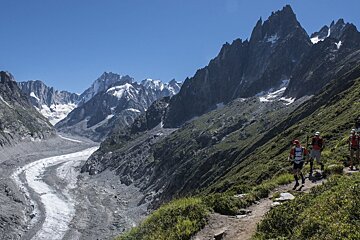
As well as enjoying the unique experience of the Montenvers train itself, the main draw for visitors to this site is the Mer de Glace. At 7km long and with a surface area of 40km², it is also France’s largest glacier, extending from an altitude of 3,900m, at the point where the Leschaux, Le Tacul and the Talèfre glaciers converge, down to 1,400m, just below the Hotel Montenvers. The width of the glacier varies between 700m to 1,950m and the depth of the ice averages around 200m but is as much as 400m thick in places!
Up until 1820, it was still possible to see the Mer de Glace from Chamonix, but since then it has steadily retreated out of sight as the vast rocky moraines along its edge will testify. However, like all glaciers, the Mer de Glace is constantly being renewed by snowfall and is permanently “flowing” under the effect of its own weight. Although this movement isn’t perceptible to the naked eye, it advances around 120m per year on the upper, steeper part and 90m per year lower down by the Montenvers viewpoint.
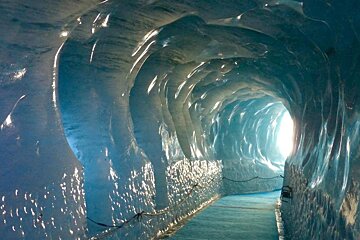
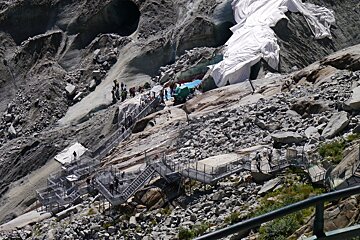
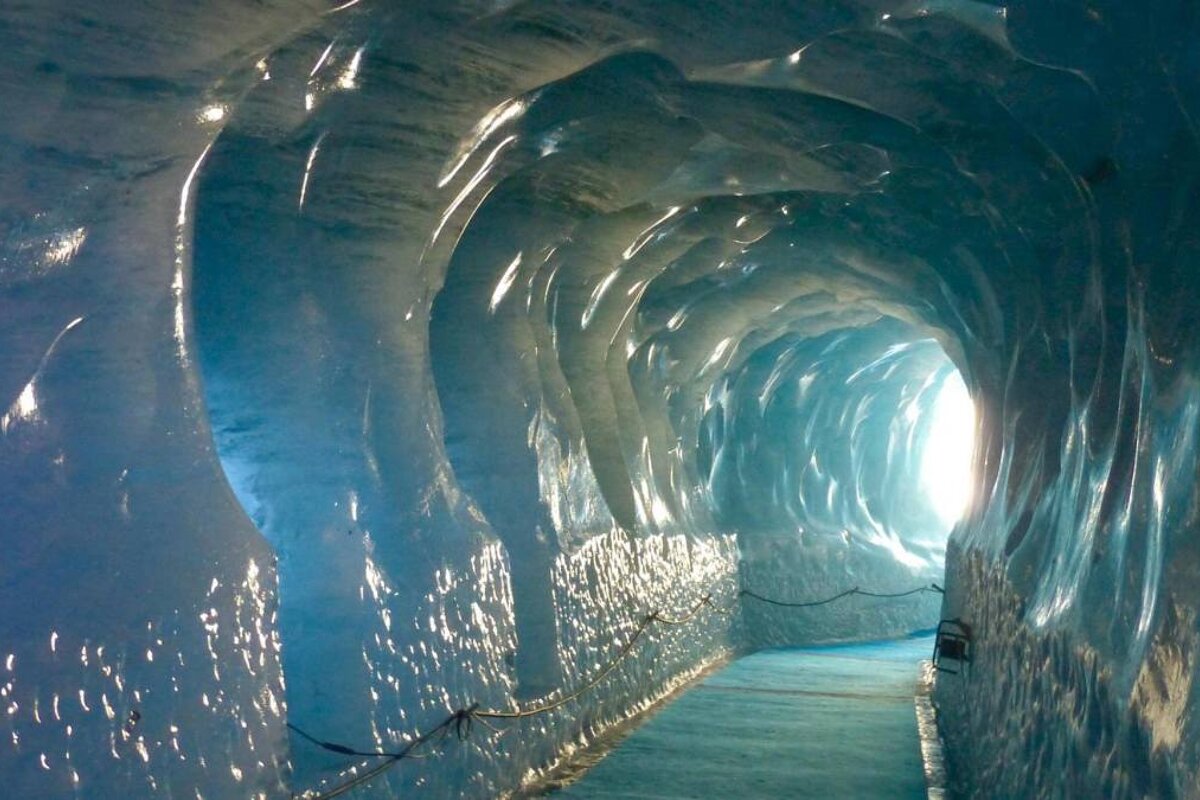
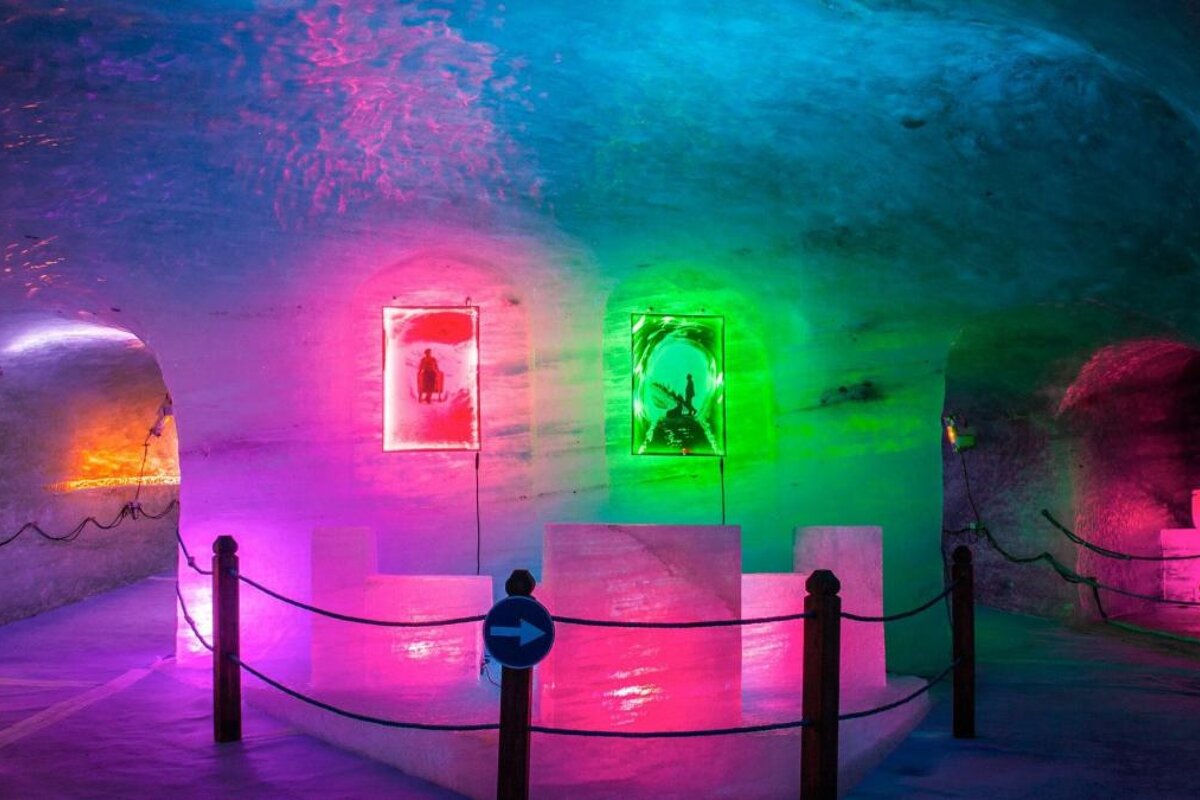
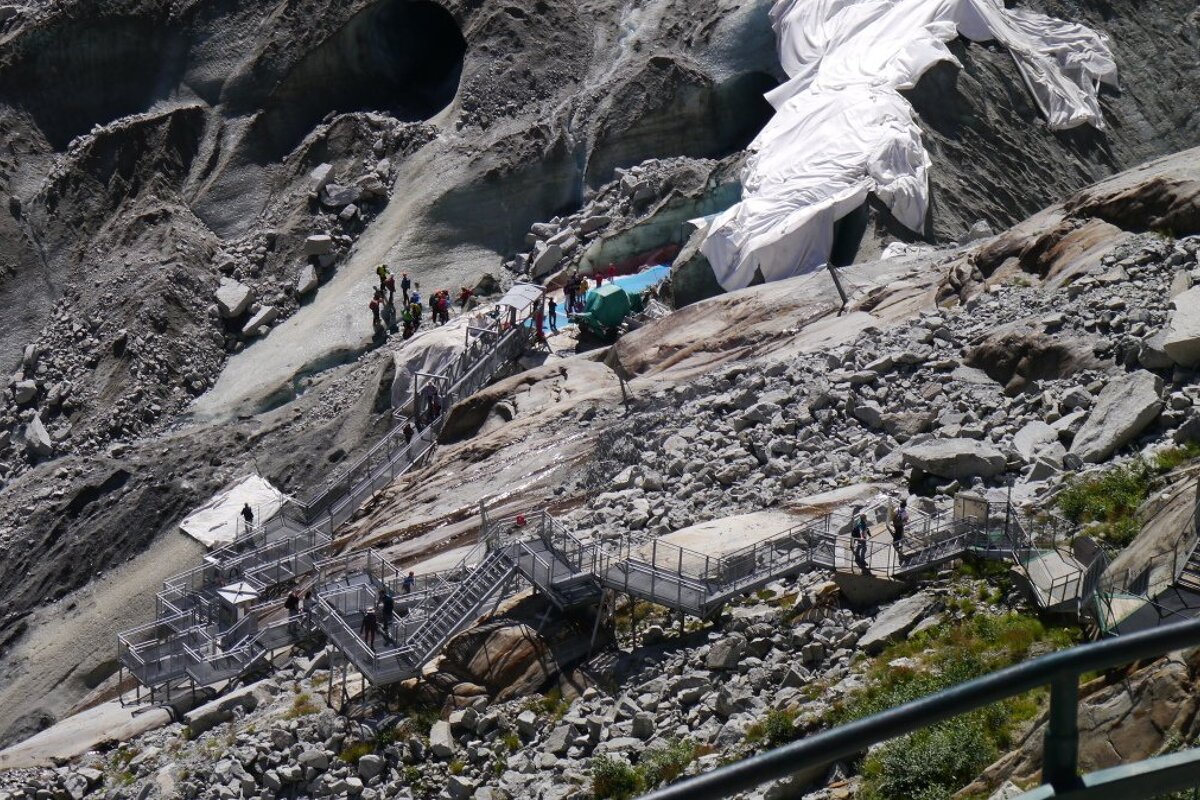
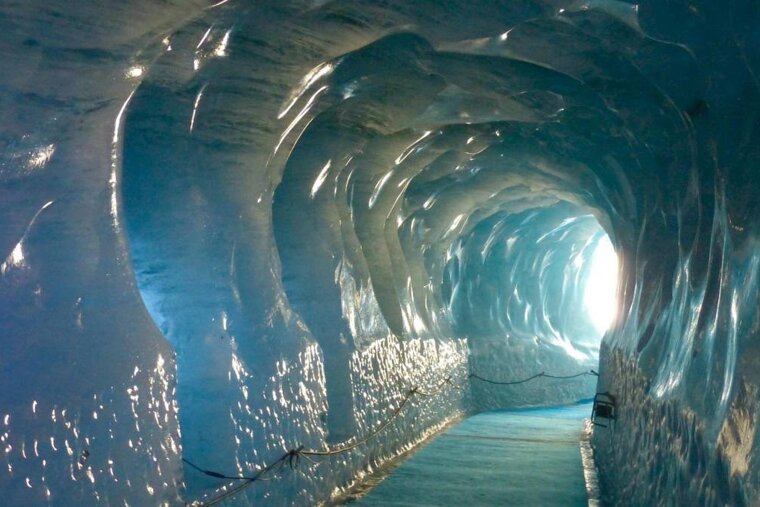
The most obvious evidence of this movement can be seen at the entrance to the ice grotto – an impressive cave that is carved out of the ice, enabling you to pass right into the heart of the glacier. For more than 50 years the grotto has been meticulously sculpted each year, shaping the ice into scenes depicting mountain life from the early 19th century. Inside, the light reflects off the beautiful blue ice to create a wonderfully eerie, sub-glacial atmosphere.
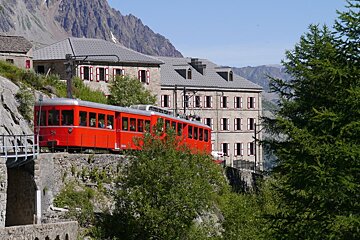
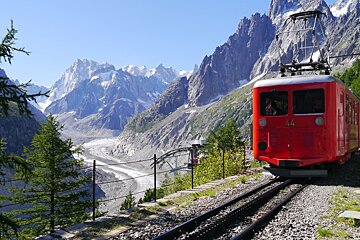
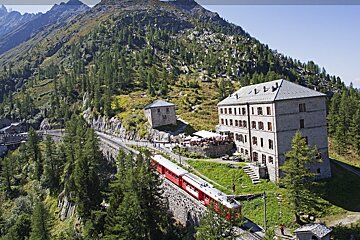
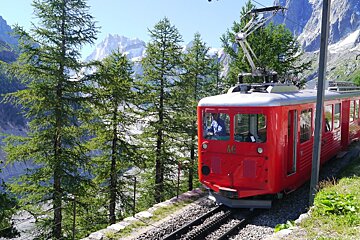
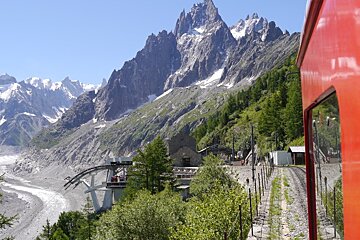
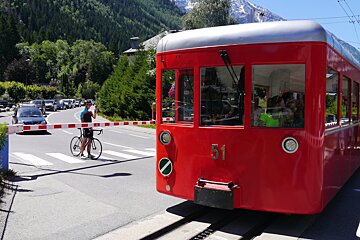
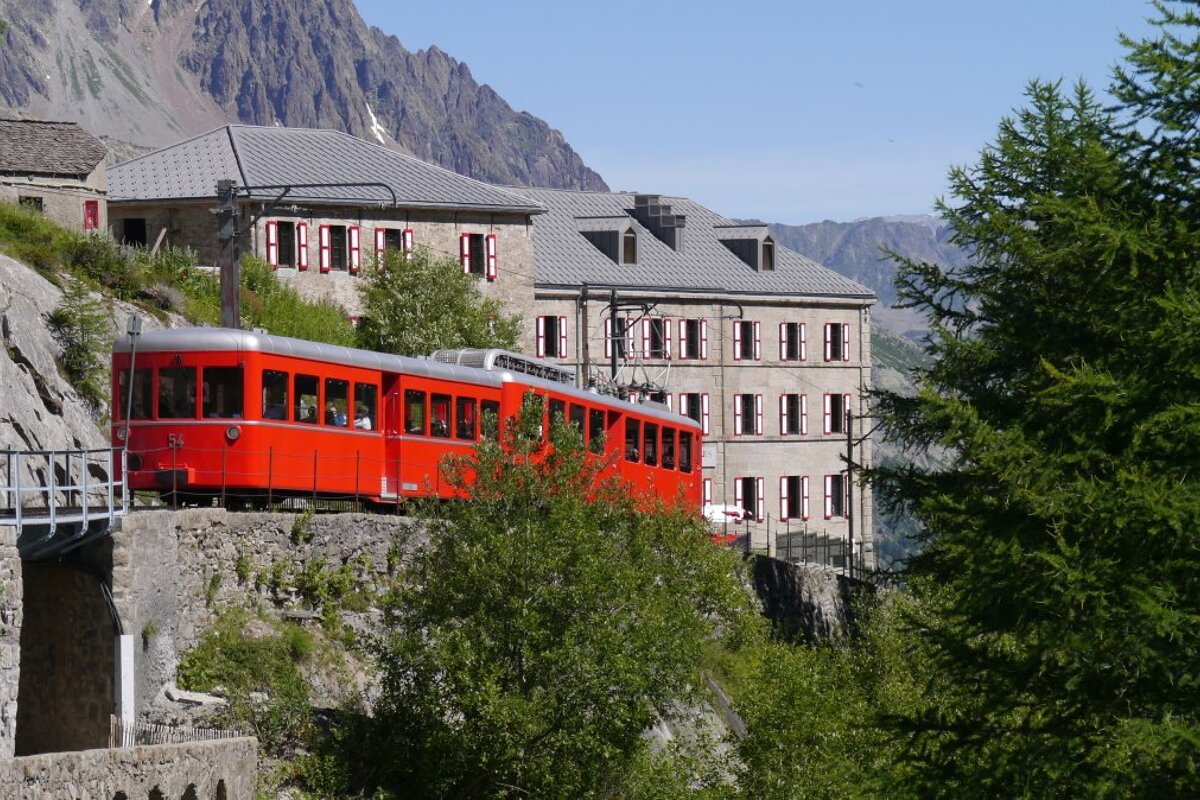
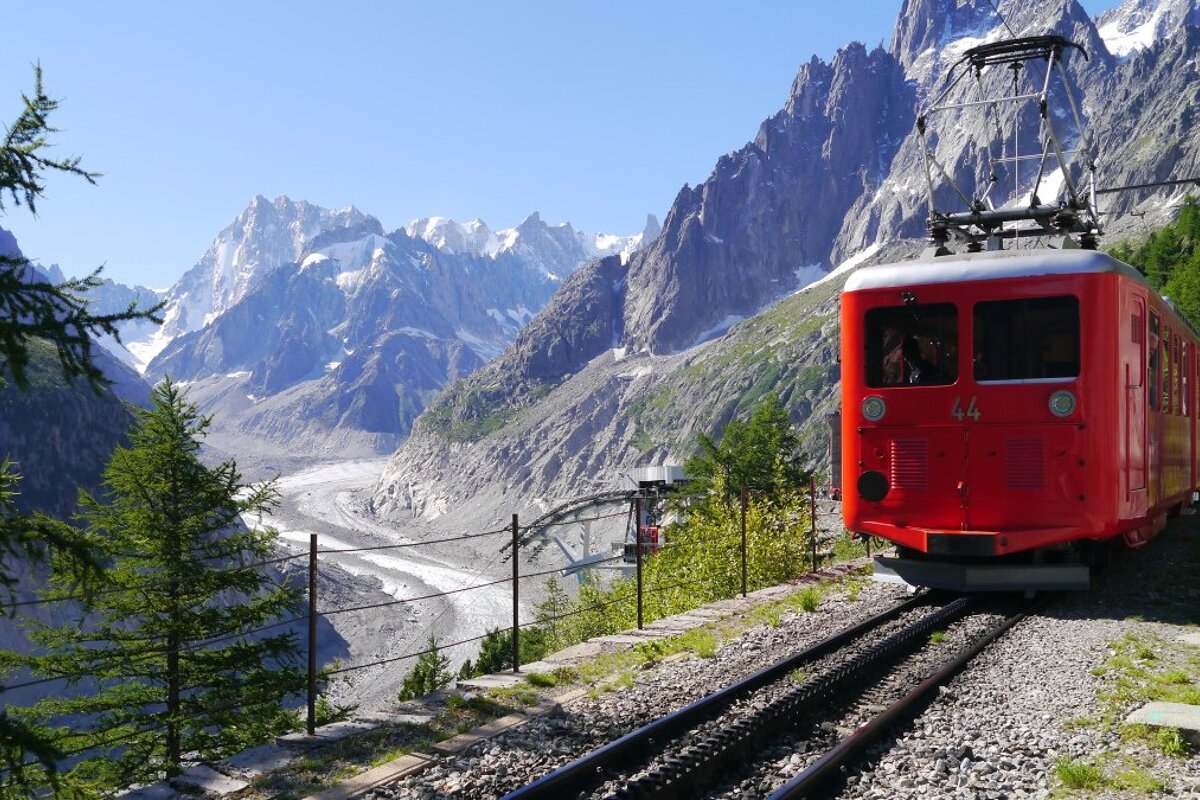
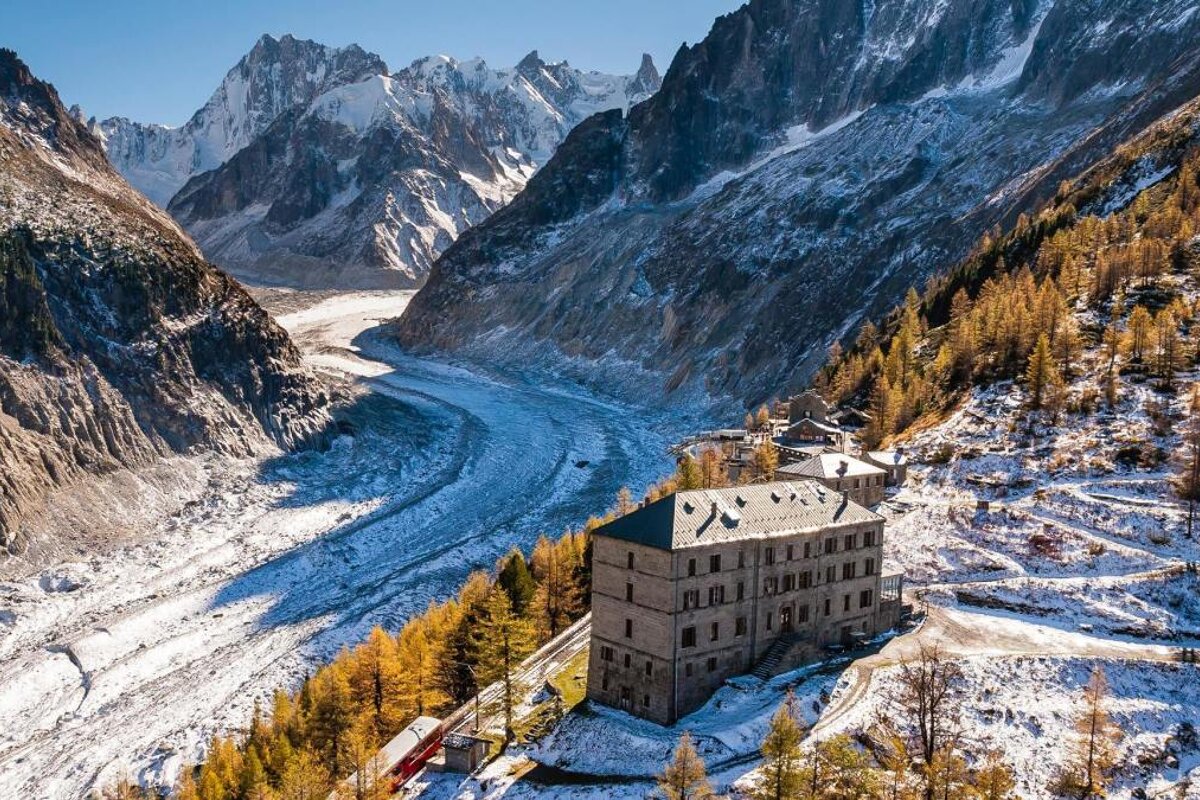
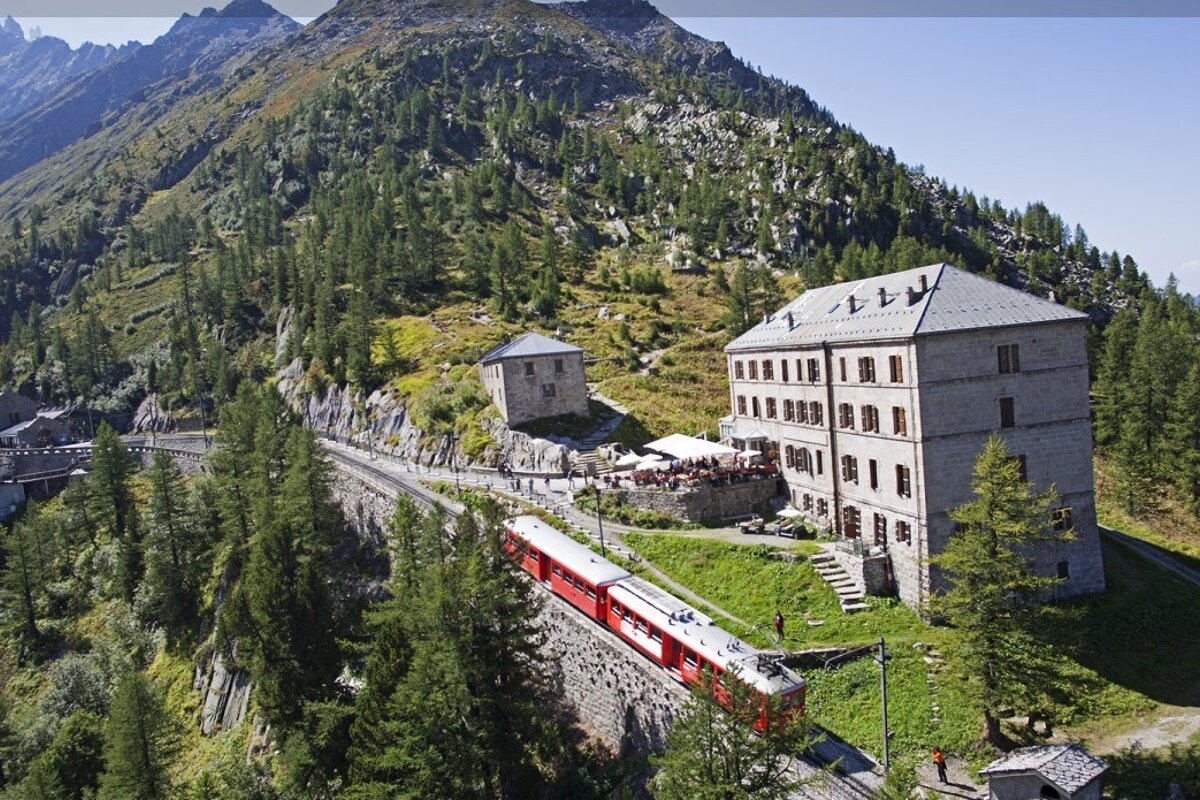
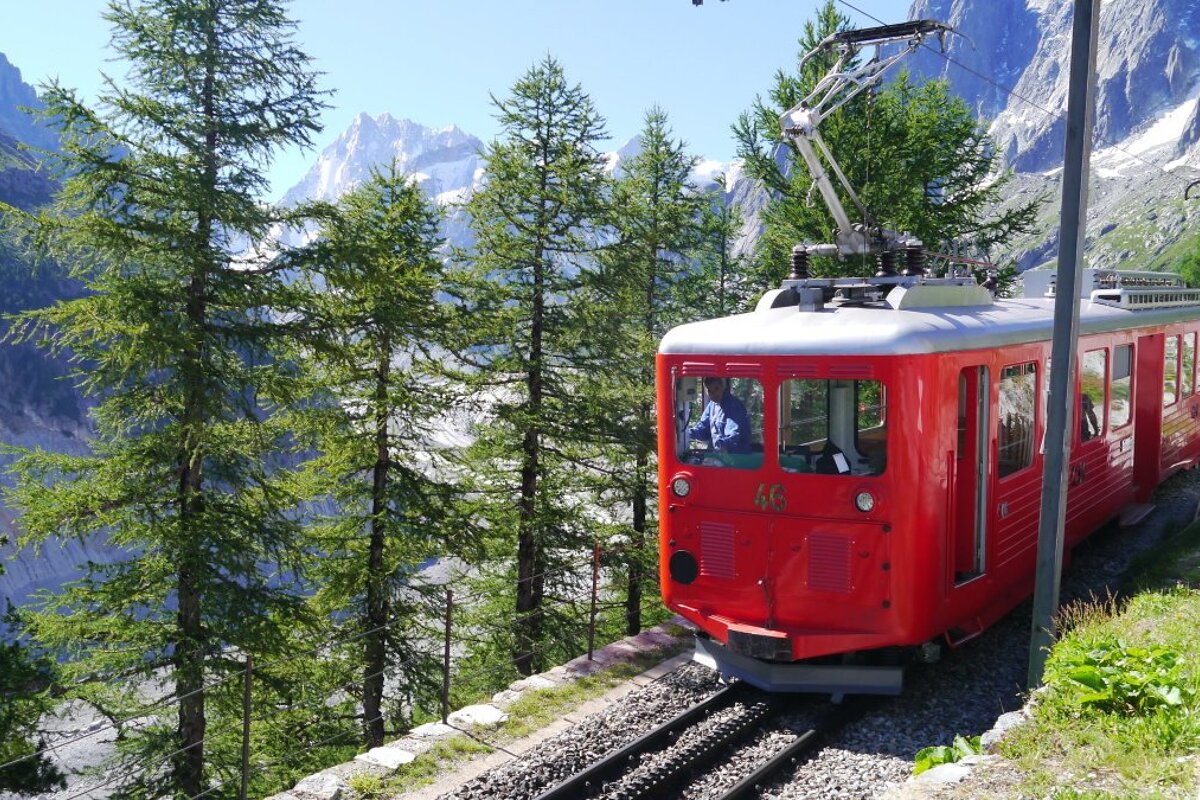
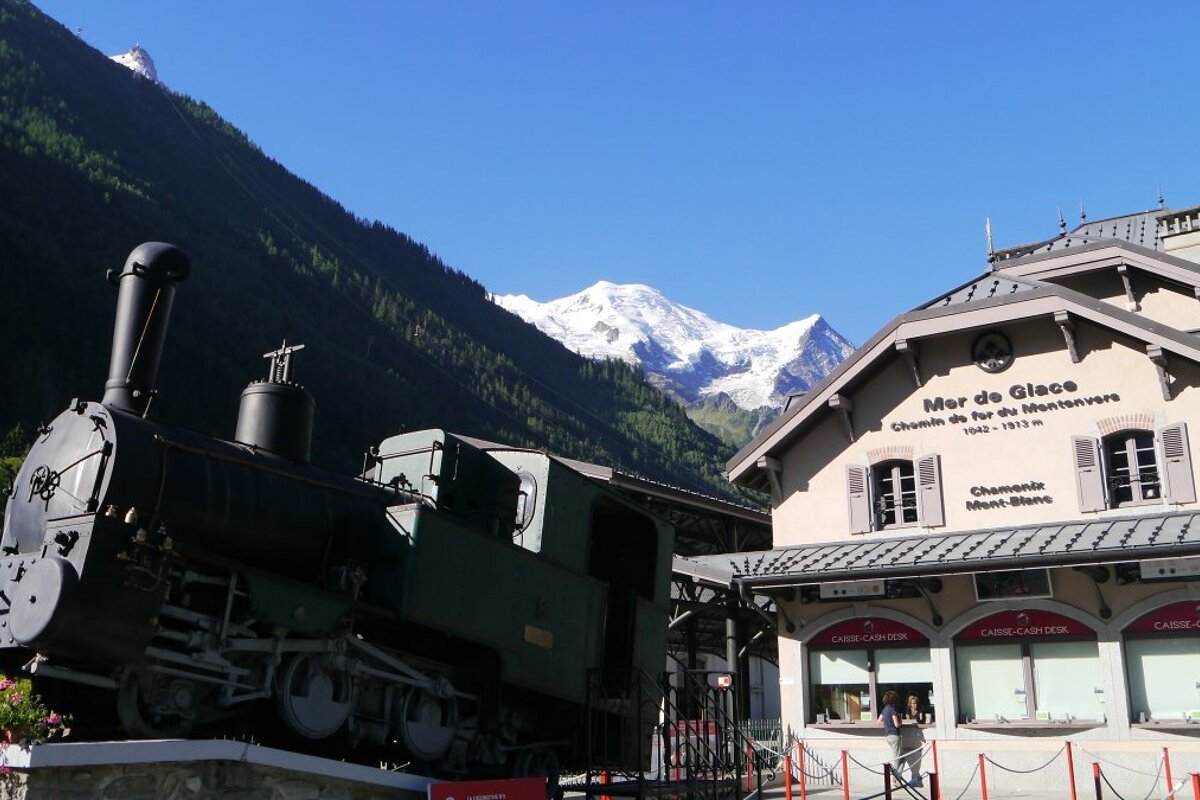
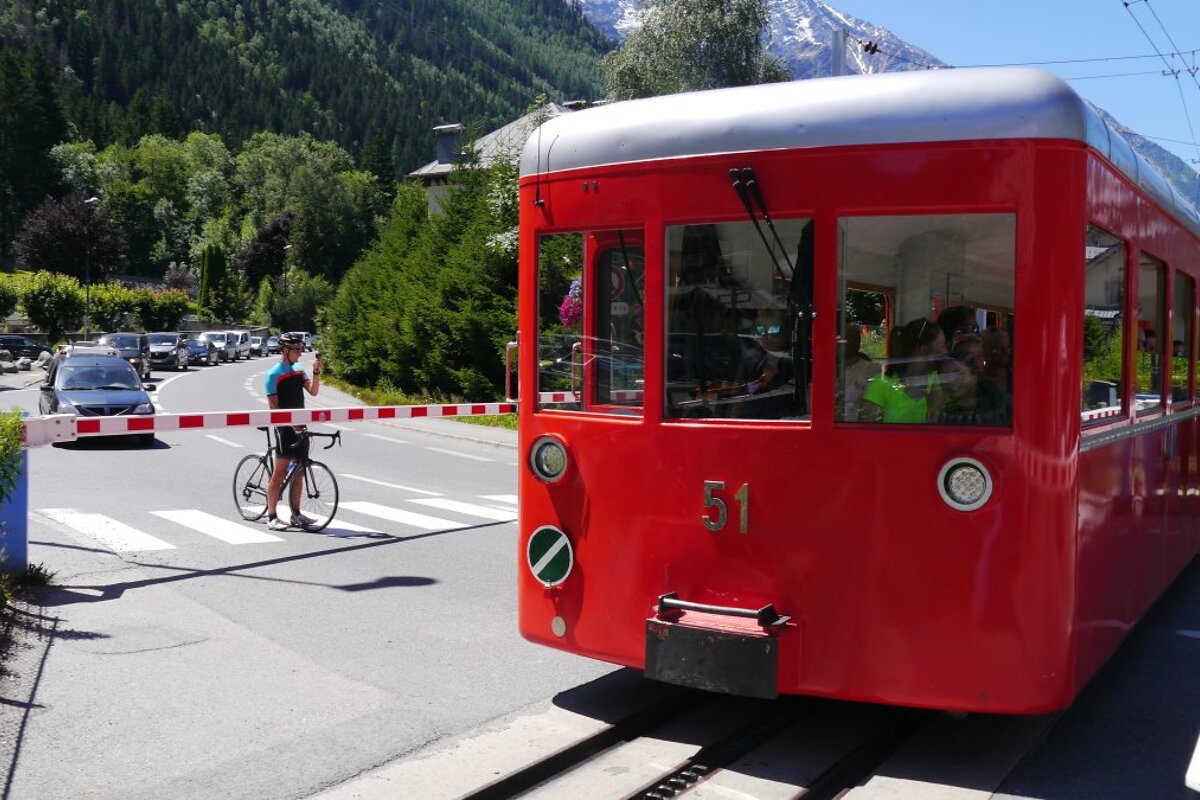
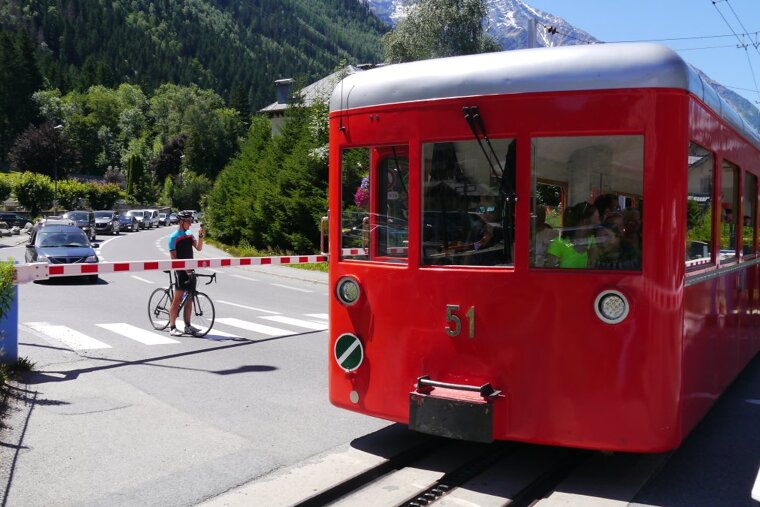
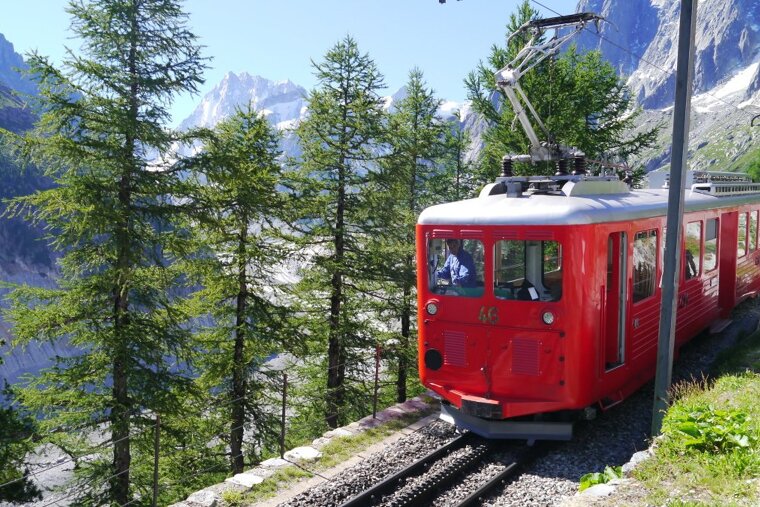
The iconic red Montenvers train runs on a rack and pinion (or cog) railway just over 5 kilometres in length (3.2 miles) and snakes its way up from Chamonix to the top station at 1,913 metres. The train was first put into use in 1908 when the line stopped at Caillet, and then fully opened all the way to the top in 1909. Prior to the existence of the trains, the only access to the Mer de Glace had been by mule or on foot.
The train runs on a single track, with one passing point part way up to allow the descending train to pass by. Fans of mountain cog railways will enjoy the train ride by itself and on special occasions, the red trains are replaced with historic train carriages which you can book as a 'Prestige train' experience. This antique train carriage journey normally includes a glass of champagne and a set lunch menu at the Terminal Neige refuge restaurant.
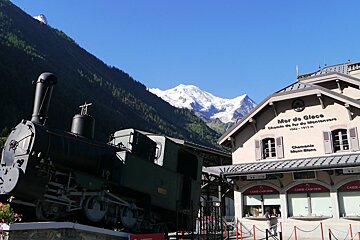
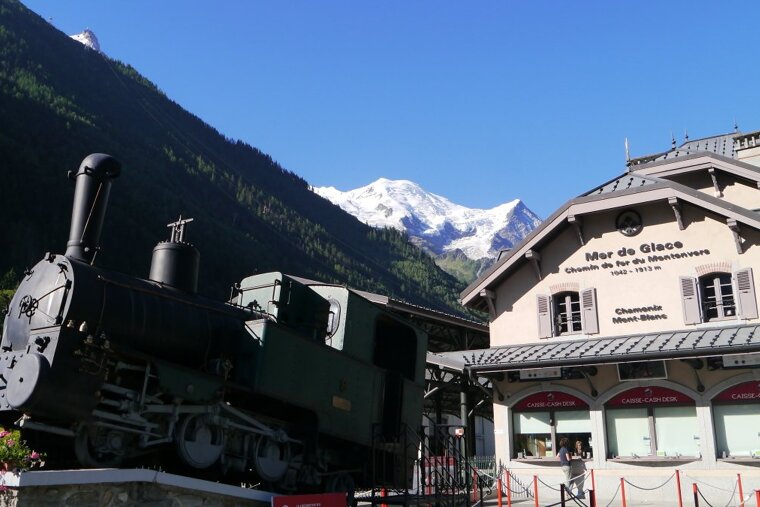
Originally the trains were pulled by steam locomotives, but these days the trains are all electric.
How long does a visit to the Montenvers / Mer de Glace take?
A visit to the Mer de Glace can take as little as 2 to 2.5 hours (not allowing for queues) or all day, depending on what you want to see, how busy the site is, whether you want to stop for lunch or if you want to step foot into the ice cave or not.
The busiest times of year are July and August, so allow extra time for queues to get onto the trains up and down, the gondola and the restaurants.
What to see at the Montenvers / Mer de Glace
Arriving at the Top station
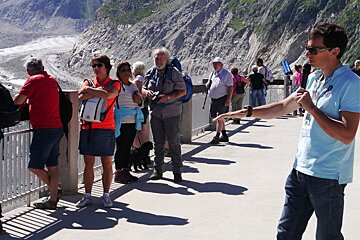
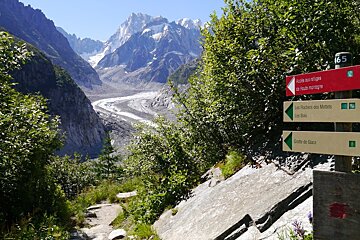
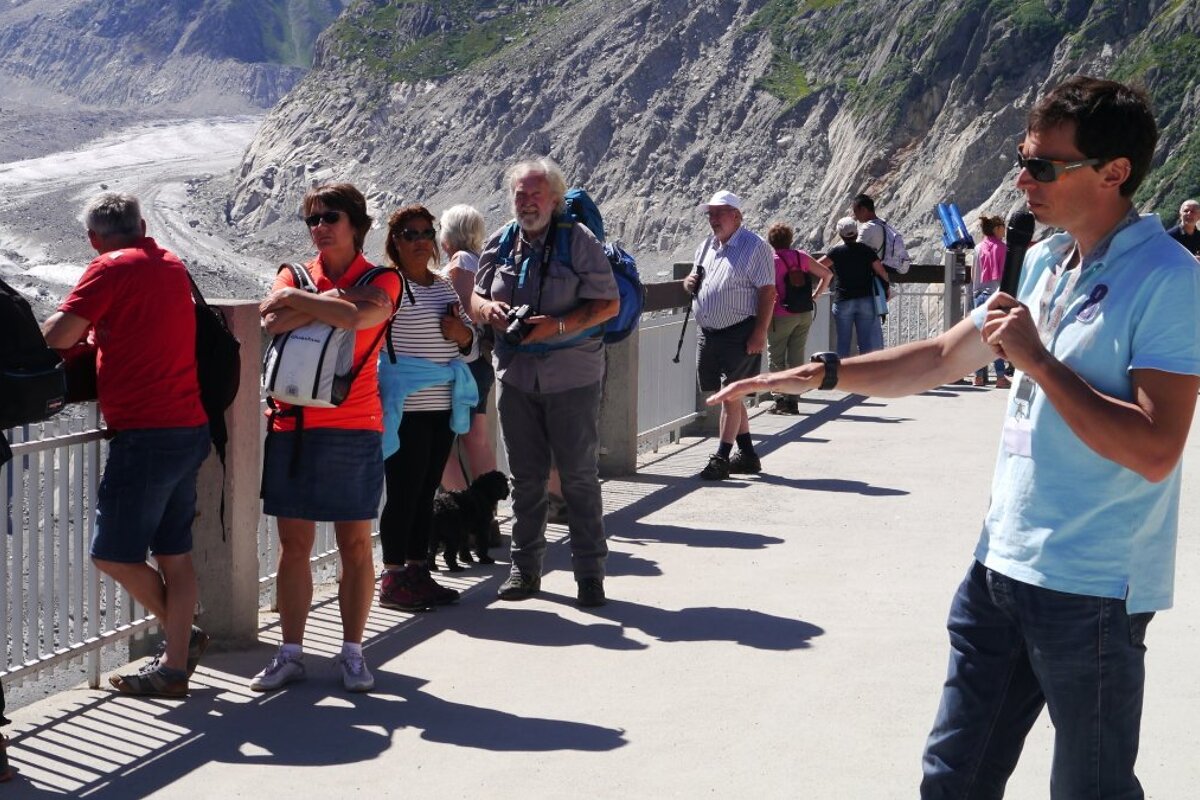
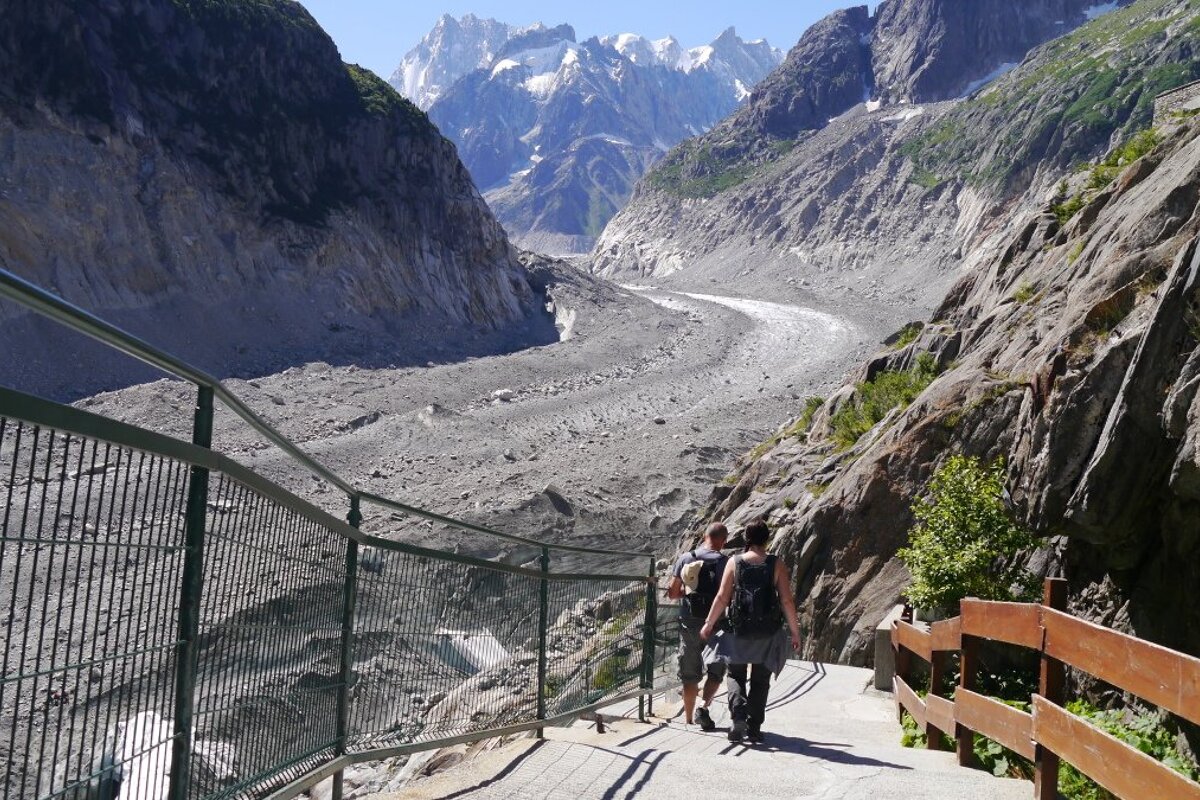
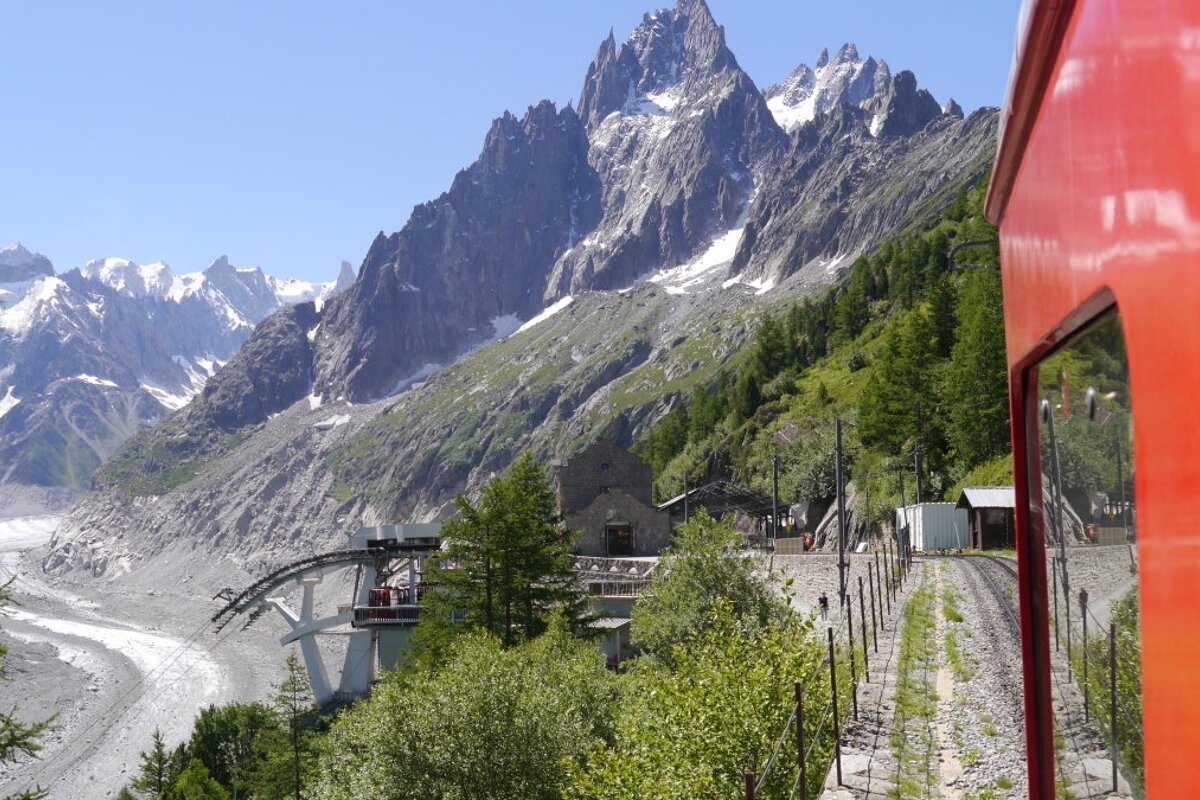
When you arrive at the top station, you'll disembark the train and step onto a large viewing platform straight in front of you, where you can look out and across the glacier below. You can easily see from this point how much the glacier has receded from the line of scoured rocks and earth directly in front of you; the top of the glacier would have been easily visible from this point, as historical photos from the time show.
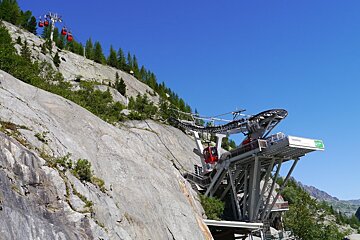
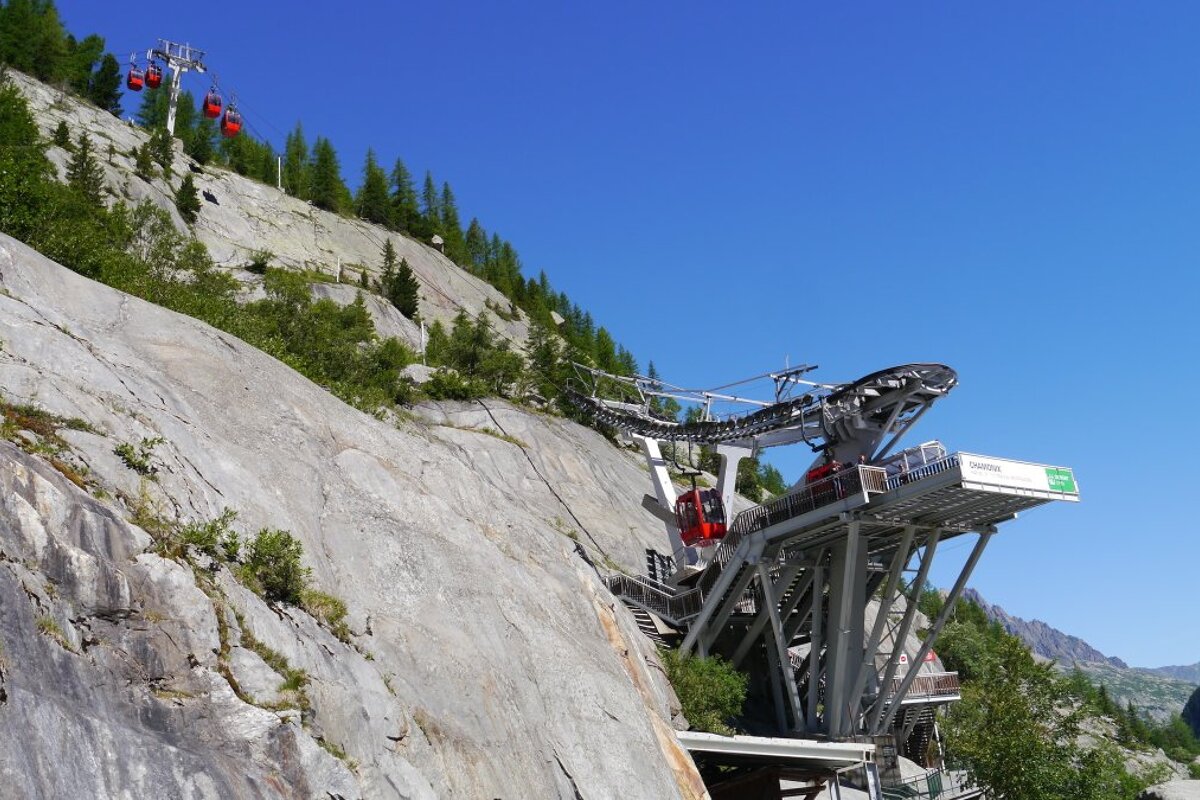
Here you'll find the Bar des Glaciers where you can grab a drink or a snack, or you can head left and down the ramp to take the gondola down to the ice cave, stopping at the bar on the way back.
The Views
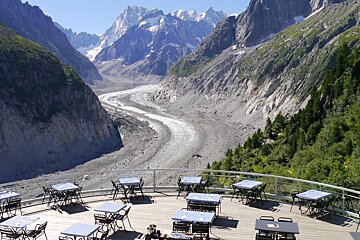
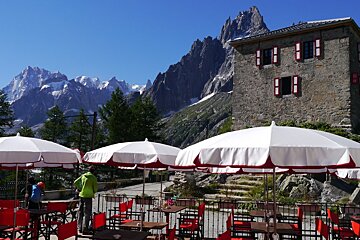
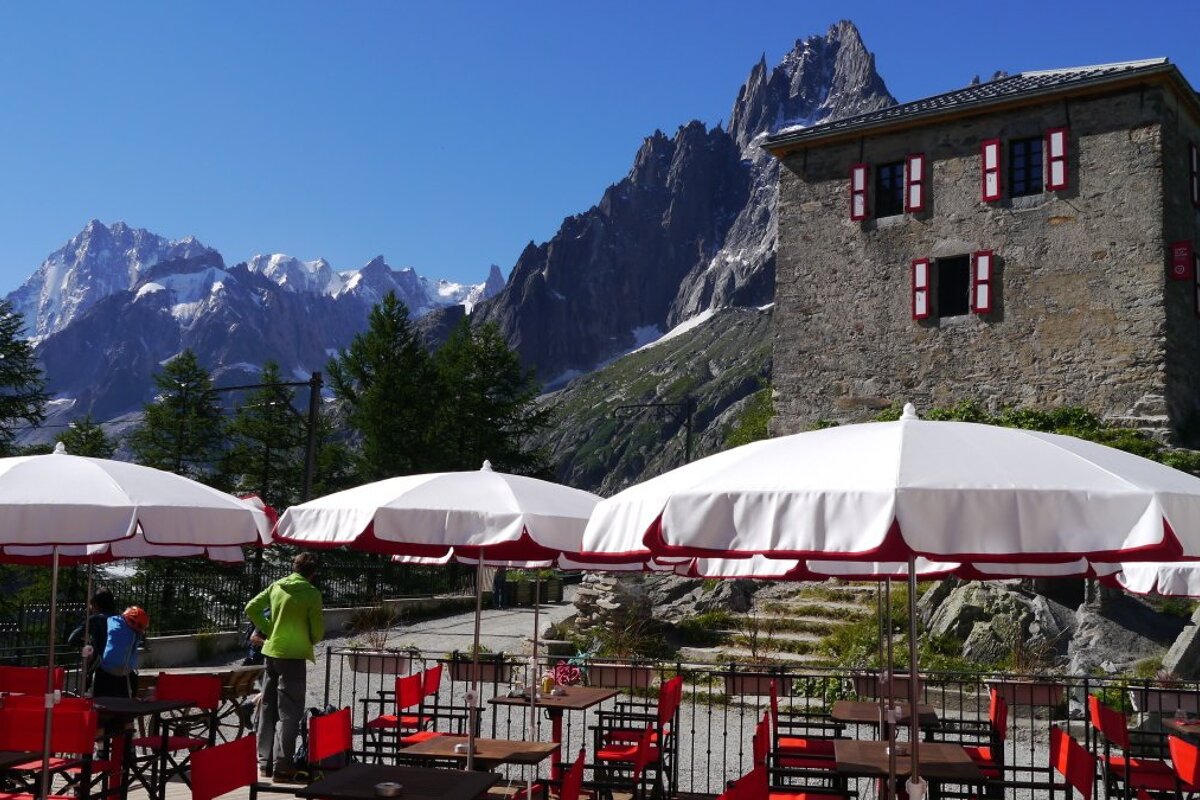
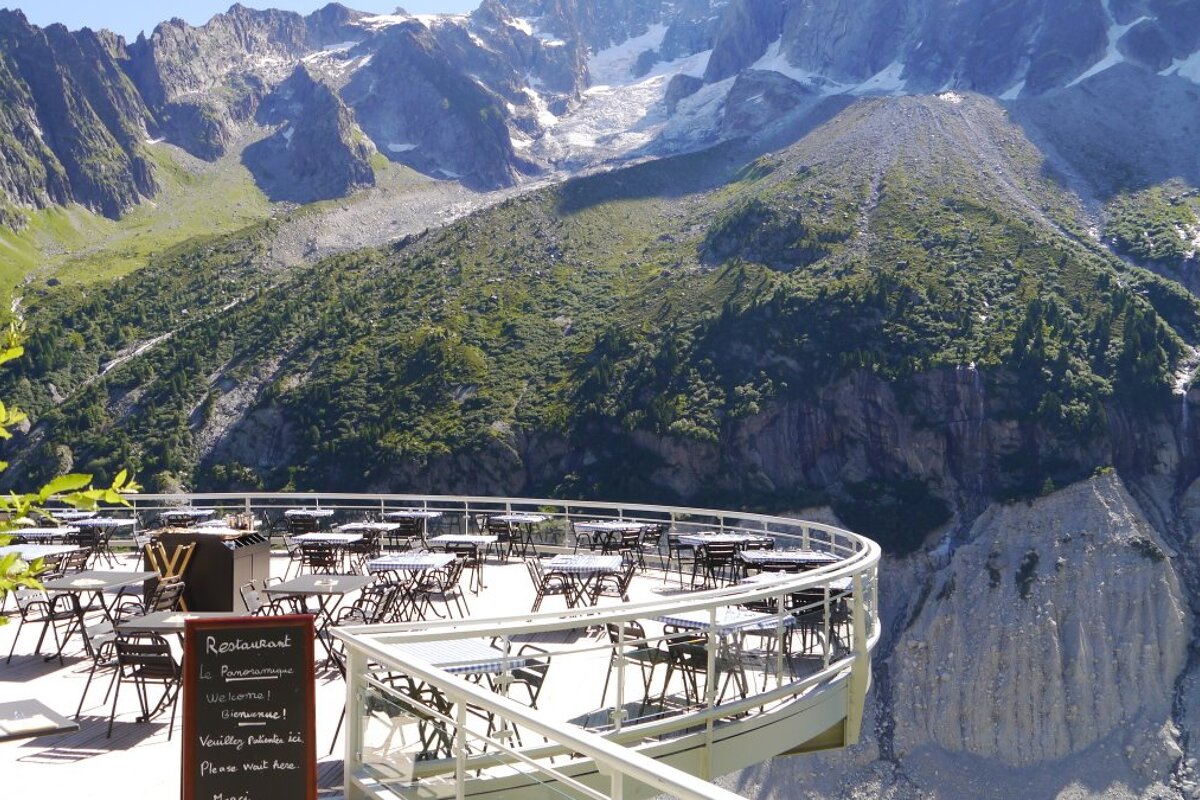
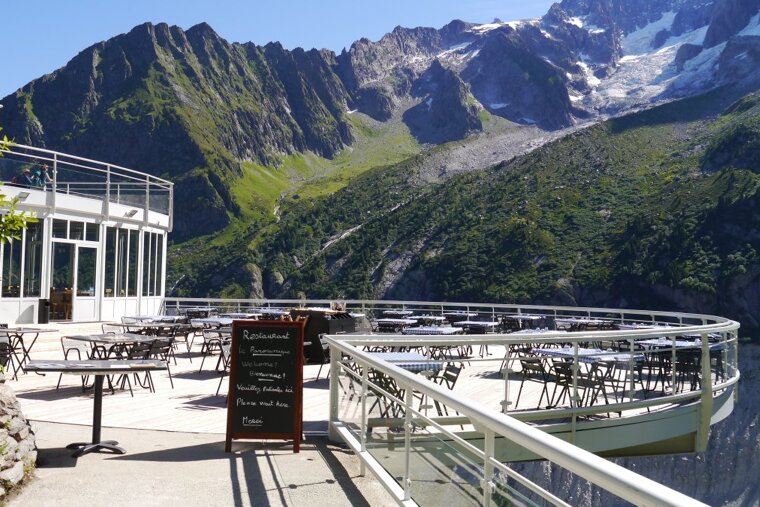
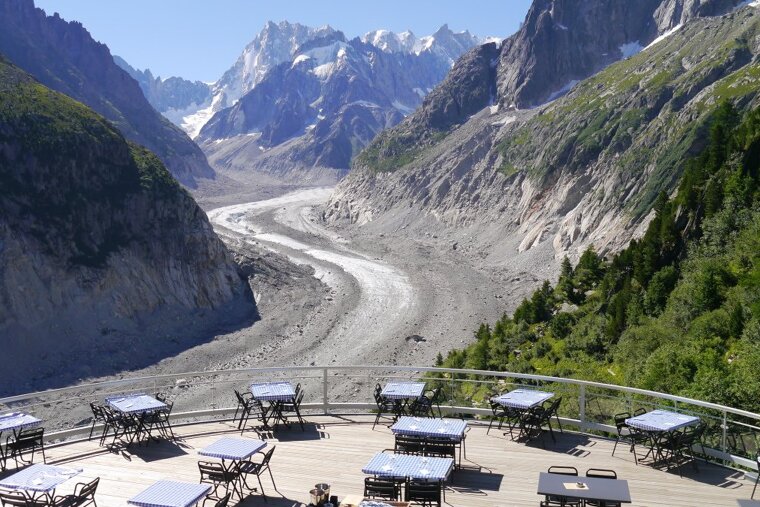
You can't fail to be impressed by the dramatic mountain views of the Drus (3,754m) and Grandes Jorasses (4,208m), that you can see on arrival at the top station of the Mer de Glace. From the terrace of the panoramic restaurant, or from the sides of the site you can watch mountaineers and skiers coming back from adventures in the mountains, or simply admire the impressive scale of the glacier and its moraines that stretch out before you.
The Ice Cave
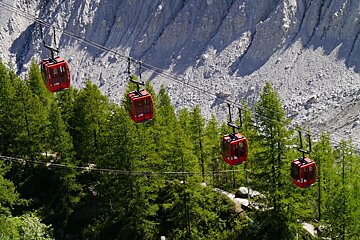
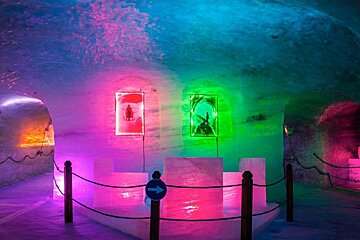
Each year a new ice cave is carved out of the glacier that is slowly making its way down hill at a rate of around 90 metres per year. The ice cave is around 100 metres long and contains coloured lights, carved ice sculptures and the occasional mannequin, portraying an historical view of life in the mountains. As you enter the cave you'll be able to see the old entrances to caves from previous years, which are no longer in use. Be advised that there are 440 steps from the bottom of the gondola to reach the ice cave, so it's not possible for people with limited mobility or in a wheelchair.
The Glaciorium
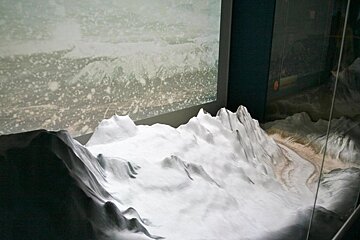
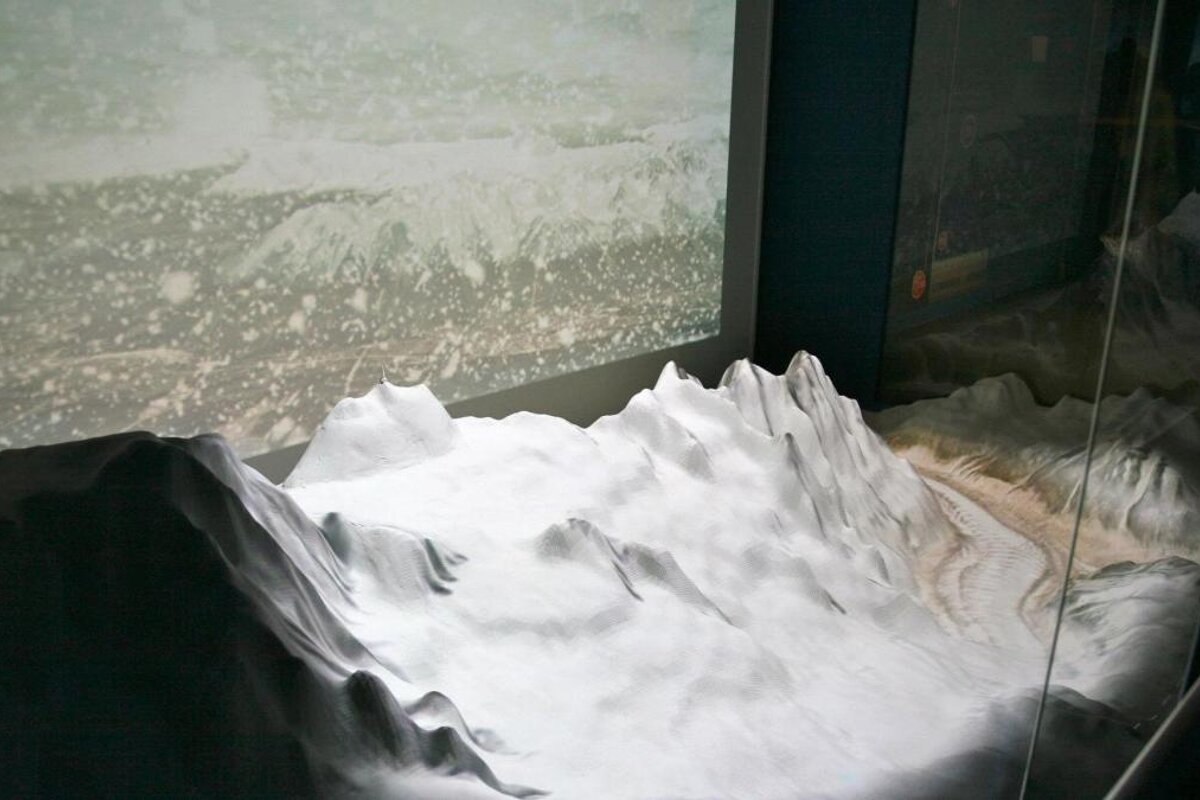
This is a small but very informative exhibit about glaciers, their formation and how climate change is affecting them. The 3D model of the Mont Blanc Massif and how its glaciers are formed is particularly impressive. A glaciologist can be found on site every day of the week from mid-June to mid-September. They can be found on the terrace between 10:00 to 12:30 and from 13:30 to 16:30. Feel free to fire any questions you might have to them about glaciers and the effect of global warming on them - they speak French and English.
The Temple of Nature
This small building, which was originally built in 1795, now contains educational scenes from the past including a new innovative audio-visual theatre show where characters bring the past to life. At the time of writing this exhibit is closed - check to see when it's open again on our live lift status page.

Where to eat & drink at Montenvers / Mer de Glace
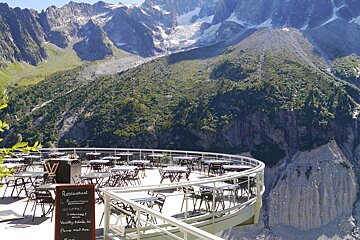
The Panoramic Restaurant has a large round terrace overlooking the Mer de Glace where you can dine in summer. On the menu you'll find lots of regional specialities, served in glass jars, on slates or in casserole dishes. A children's menu is also available and there's a good wine list to accompany your food.
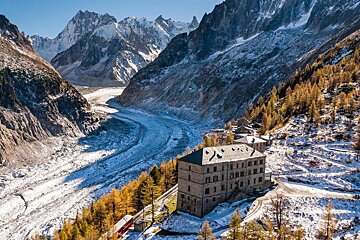
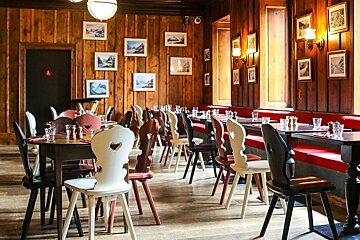
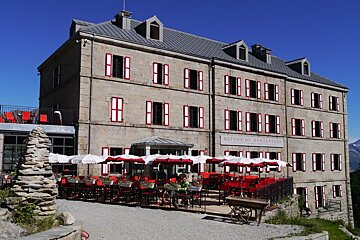
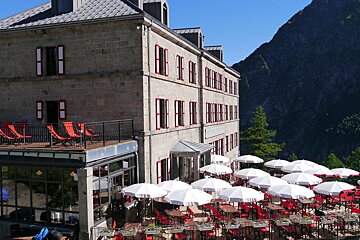
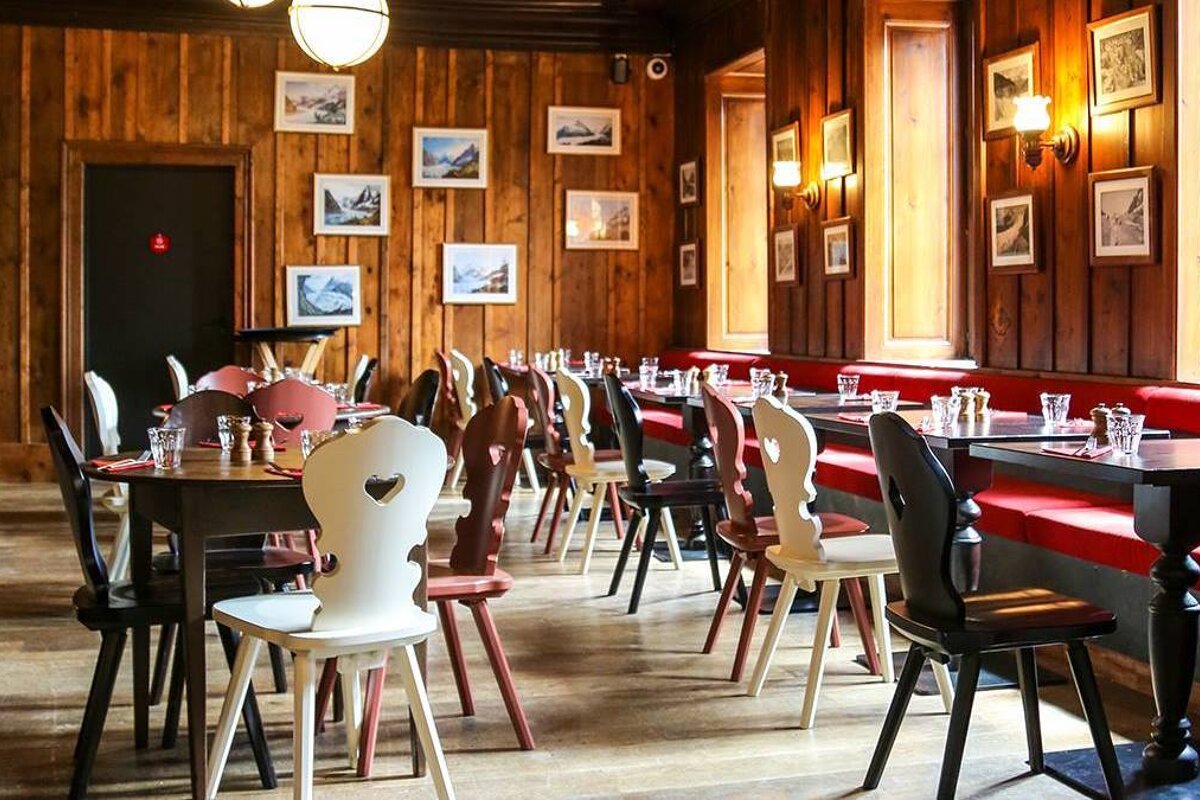
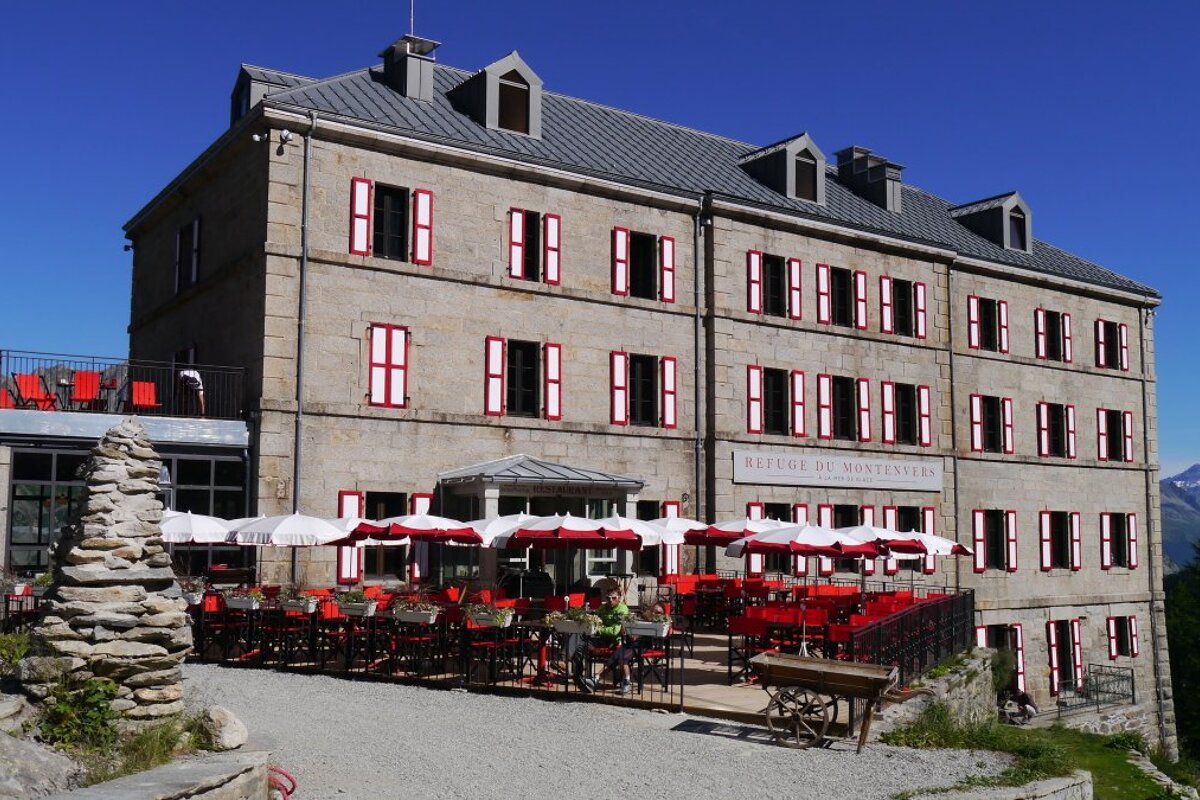
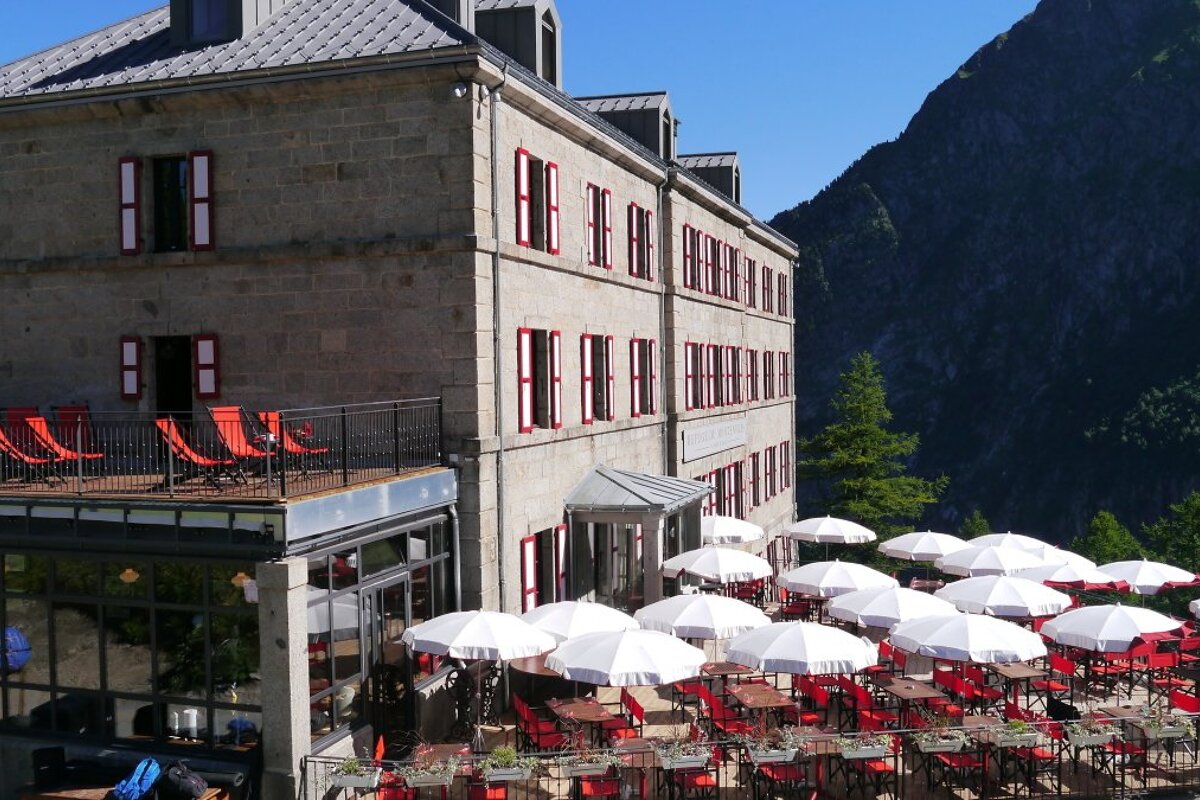
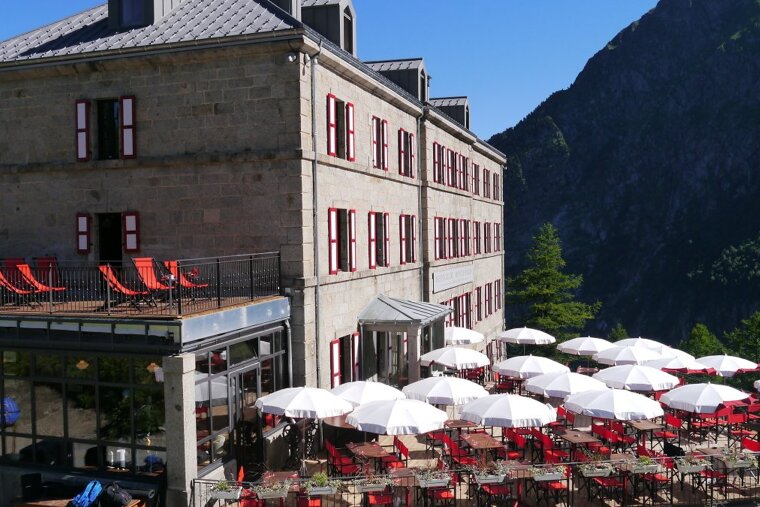
Terminal Neige - Montenvers Restaurant can be found at the Refuge, the large stone building near the train stop. There's a large outdoor terrace or you can dine inside in the charming refuge building. They're open every day for lunch - dinner is only available to those staying at the refuge.
Bar des Glaciers is a café and bar is located next to the train stop. Inside you can grab a drink, slice of cake or a muffin or enjoy a platter of charcuterie.
Toilets can be found at the departure station next to the Bar des Glaciers, in the Terminal Neige Refuge and at the station at the bottom.
Where to stay
There are many options of places to stay in central Chamonix, including hotels, apartments and chalets although you can actually spend the night at Montenvers, in the Terminal Neige Refuge. This grand old building has been welcoming mountaineers and visitors to the Mer de Glace since the site was opened. Mountaineers can also stay in some of the nearby mountain huts and refuges which are accessible from the glacier, leading to a variety of climbing and mountaineering routes in the backcountry.
How to get to the Montenvers / Mer de Glace
There are a number of different ways to get to Montenvers station or the Mer de Glace.
On Foot
If you're starting in the centre of Chamonix, you can get to the station easily on foot as the station is located just behind Chamonix's main line train station, accessed over a small footbridge, or alternatively it's just a short walk from Place Mont Blanc or Planards car parks.
There are a couple of walking trails that lead to the Mer de Glace from the mid station of the Aiguille du Midi lift, across the Grand Balcon Nord, which in itself is a popular summer hike. You can also hike up to the Mer de Glace from Planards and take the train back down, or take the train up and either hike down or hike across to the Midi mid station.
Mountaineers and skiers use the Mer de Glace to access various climbing routes, refuges and ice climbing and it's also part of the return journey from skiing the infamous 'Vallée Blanche' (VB) off piste route. Anyone coming back down the Mer de Glace from the VB will need to tackle to steps back up to the top and join the train to descend back to Chamonix.
Bus
You can get off any of the Chamonix buses that stop at Place Mont Blanc. From here keep the hotel Alpina behind you and head straight across the roundabout, cross the bridge and you'll find Montenvers station on your right-hand side (you'll see the train line crossing the main road so you can't miss it).
Petit Train
The Petit Train which circumnavigates Chamonix town centre stops at Montenvers station which is really handy. Plus if you've bought a Mont Blanc multipass you'll also get a reduction on the petit train ticket.
Mulet Bus
The Mulet is the free shuttle bus in Chamonix town centre and there are two stops you can use to access Montenvers station. The first is outside Chambre Neuf and the main train station and the second is the stop near the roundabout at Place Mont Blanc. From Chambre Neuf, head directly across the road to the footbridge and across to Montenvers or from Place Mont Blanc turn right and head up hill, crossing the main train line below the bridge and you'll see Montenvers station on your right. It's just a one to two minute walk from either of these stops.
Mont Blanc Express Train
If you're coming by train, the Mont Blanc Express train stops in Chamonix centre. From here you turn right out of the station and take the footbridge across to Montenvers station.
Driving
The closest car park to Montenvers is an outdoor car park on the main road directly across the road from the station at Planards. There's also an underground car park at Place Mont Blanc, or slightly further away but still accessible on foot is the Grepon car park. Find out more about parking in Chamonix.
When to visit the Mer de Glace
The Mer de Glace is open all year round, with the exception of three weeks in October for its annual closure. The latest timetables for trains to the Mer de Glace on for Summer or Winter will tell you the dates that the site is open, but its also a good idea to keep an eye on Live Lift status, where you can check to see if the individual attractions and restaurants at the Mer de Glace are open before you head up there.
Keep an eye on the Chamonix weather forecasts as well - too much cloud and there won't be any views to enjoy, or check in on our Mer de Glace webcam for up to date views from the site.
Prices & Passes for the Montenvers / Mer de Glace
Find summer prices or winter prices for the Mer de Glace and Montenvers Train.
You can buy passes at the cash desks in Chamonix, or you can buy a Mont Blanc Multipass (online or in resort). As well as access to the Mer de Glace, this one day pass also allows you access to the Aiguille du Midi, the Tramway du Mont Blanc and the five main summer lifts of Brévent, Le Tour, Flégère, Grands Montets, Les Houches and Les Bossons chairlift.
You don't need to buy tickets in advance unless you're in a large group, which you would still need to do in person at the ticket office.
The trains are filled on a first come first served basis, whether you're going up or coming down, so the earlier you can get there the better. If you or one of your party are in a wheelchair please advise the ticket office so that they can assist you.
More inspiration...
You can combine a trip to the Mer de Glace with a visit to the Aiguille du Midi in the same day if you buy a Mont Blanc Multipass. This also works out cheaper than paying for the two experiences separately. Buy all your passes at the ticket offices in Chamonix, which you'll find at the base of each of the lifts or the Montenvers-Mer de Glace train.
Find more activities and things to do in Chamonix in Summer or Winter.